
READ: Exodus 13:17-15:21
When Cecil B. DeMille was telling the story of the Exodus in his 1956 movie, The Ten Commandments, the crossing of the Red Sea was the climax of the story. The innovation behind this scene was cutting edge. There were no computer graphics. Everything was shot in camera. DeMille was able to capture this stunning imagery by filming water flooding into a corridor and then playing it back in reverse. The Oscar worthy cinematography still holds up to this day.
The crossing of the Red Sea is, in fact, the pinnacle to the story of the Exodus because that is what “Exodus” means: “To get out.” This is the moment where God finishes His work in rescuing His people out of slavery in Egypt. Yet, there’s more to the story.
The Israelites didn’t haphazardly wander into a dead end. The LORD intentionally led them where He wanted them to be.
Although we might have the pictures of the crossing of the Red Sea in our heads, thanks to Cecil B. DeMille, it is still essential that we understand the literary flow of the text and consider what God wants us to know and ponder about how He saved His people.
SETTING THE STAGE
Starting in Exodus 13:17, we see that the LORD was leading His people out of Egypt with a pillar of fire and cloud, but He did not take them on the most direct route into the promised land. That would have passed through the territory of the Philistines. God knew that the people would be frightened by war and driven back into Egypt. Instead, the LORD led them toward the wilderness. But before they could make it across the border of Egypt, He turned them around and had them encamp along the shores of the Red Sea.
It is important to note that the Israelites didn’t haphazardly wander into a dead end. The LORD intentionally led them where He wanted them to be. His plans were about to be made clear, but they weren’t evident on the surface.
When Pharaoh and his advisers heard reports of the Israelites wandering in circles within their borders, they took it as an omen that their gods were not allowing the Israelites to leave. This was particularly ironic because the previous ten plagues were designed to systematically dismantle the notion that the Egyptian gods had any power or authority. The LORD was declaring that He is the one true God, and there is no other. Regardless, Pharaoh’s heart was hardened and he jumped at the opportunity to raise an army and go after his slave force.
When the Israelites saw the army pursuing them, they panicked. They complained to Moses that they had never wanted to be saved in the first place, saying, “Is it because there are no graves in Egypt that you have taken us away to die in the wilderness? What have you done to us in bringing us out of Egypt? Is not this what we said to you in Egypt: ‘Leave us alone that we may serve the Egyptians’? For it would have been better for us to serve the Egyptians than to die in the wilderness” (Exodus 14:11-12).
Is that really what they said when Moses showed up announcing that the LORD had heard their prayers and was going to rescue them? Not at all. They initially worshipped at the news (Exodus 4:30-31). But even then, as soon as things started to get difficult, they turned on Moses (Exodus 5:20-21).
For all intents and purposes, this was not a good scenario for the Israelites. They were trapped between the waters of the Red Sea on one side and the massive army of Pharaoh on the other side. Moses, however, responded to the people by telling them to grab their buckets of popcorn (hypothetically speaking) and watch what the LORD was about to do (Exodus 14:13-14). The scenes that followed were going to be quite the spectacle.
LIGHTS, CAMERAS, ACTION
At this point, the LORD spoke to Moses and laid out the script (Exodus 14:15-18). He was going to work a miracle and save His people by having them walk through the Red Sea, while simultaneously using the same event to teach Pharaoh and the Egyptians their final lesson. But before He did that, He repositioned His glory between the Egyptian forces and the Hebrew people.
The cloud that had been guiding them to encamp by the Red Sea now moved between the two groups. The cloud cast a darkness over the Egyptians but lit up the sky for the Israelites all night (Exodus 14:19-20). This is significant because it reiterates the lesson seen in the final three plagues when Egypt was covered in darkness, cutting them off from Ra, the sun god. Yet, God turned the spotlight on the Hebrew people so that they could see how He was going to fight their battle for them (Exodus 14:14). All they had to do was watch silently.
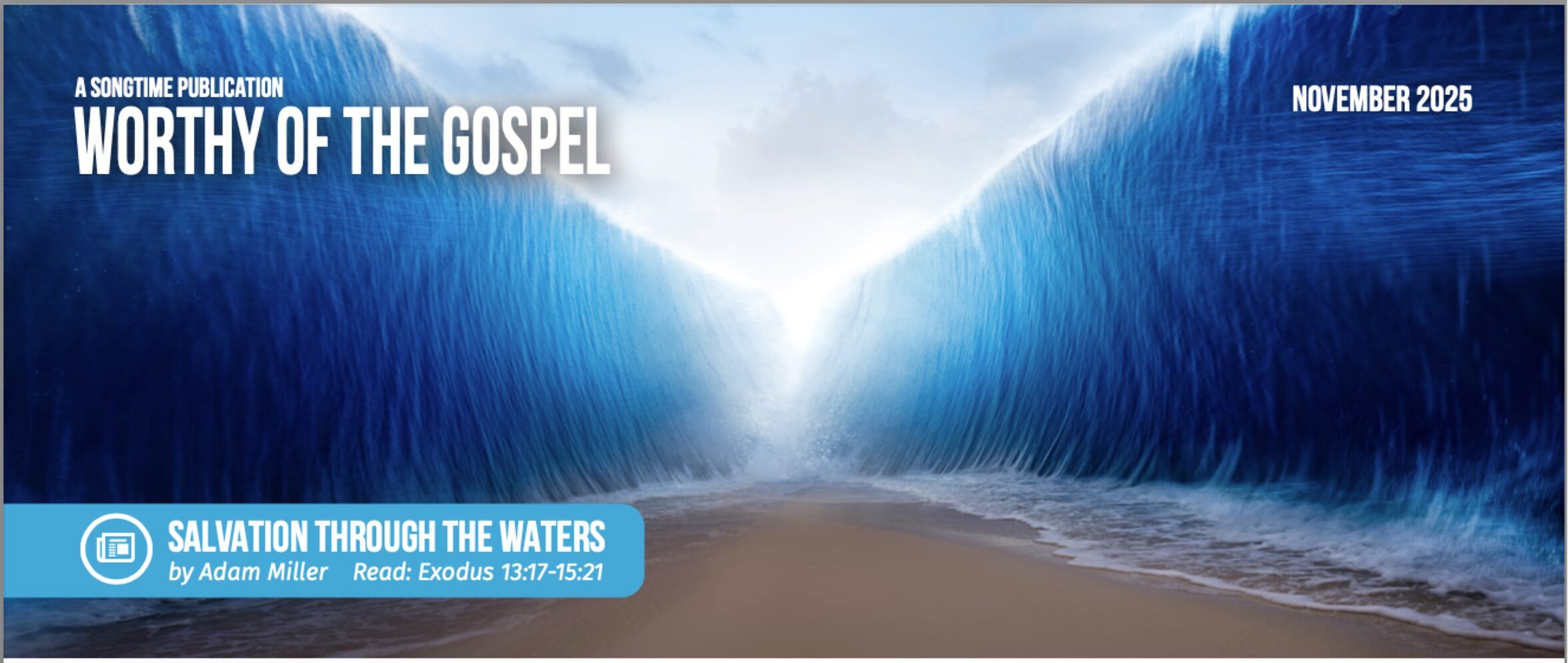
The parting of the Red Sea must have been a sight to see. This wasn’t simply the tide going out or any other natural phenomenon. The waters stood up like a wall on either side and carved out a path through the waters so that the Israelites could walk across on dry ground (Exodus 14:21-22).
As the Egyptian forces pursued the Israelites through the Red Sea, the LORD turned their advantage of horses and chariots into a liability. The plot was finally revealed to them, and they responded, “Let us flee from before Israel, for the LORD fights for them against the Egyptians” (Exodus 14:25). But it was too late. After the Israelites made it safely to the other side, the waters came crashing down upon the Egyptians and none of them escaped.
LET THE CREDITS ROLL
Whenever I go to the movies, I like to sit through the credits. Sometimes they’re entertaining, filled with bloopers or end credit scenes, a little reward for sticking around. Even the music during the credits can serve as a satisfying conclusion to the story and provide some time and space to let the story sink in. After their rescue from the Egyptians through the Red Sea, we have the songs of Moses and Miriam, his sister, recounting the events and celebrating their salvation (Exodus 15:1-21). This gives us time to consider some significant details in the story.
First, note that their rescue is described as salvation (Exodus 14:13, 30, & 15:2). But how were the people saved? God saved them by parting the waters and providing the way of salvation. The people still had to walk through the waters. It wasn’t enough to marvel at the scene. They had to take the step of faith. The crossing of the Red Sea parallels the story of Jesus and Peter walking on the water (Matthew 14:22-33). Jesus called Peter out of the boat, and he seemed to be doing well until he took his eyes off of Jesus and looked at the waves crashing around him. But even then, Jesus saved him when Peter called on the name of the LORD.
Second, one of the arguments I hear from people today is that it seems unfair that God would be so harsh in punishing what He regards as wickedness. They don’t want to imagine a God who is angry with sin. I don’t think any of the Israelites were sympathetic to the Egyptians who were chasing after them with a violent army, but let’s consider that some of them empathized with their oppressors. There was only one path to salvation. The Egyptians were not in a forgiving mood. By refusing to pass through the waters, those who remained in Egypt would have suffered the fate of their enemies. In the final judgment, God is not going to reward those who objected to His plan of salvation in protest for those who refused to bow the knee to King Jesus.
Third, the people were not saved by the measure of their faith. They doubted God and even blamed Moses for bringing them out of Egypt to die in the wilderness. But God saved them anyway. I’m sure some people walked through the waters with excitement. Others, like me, were probably afraid and wanted to consult with a structural engineer to make sure it was really safe. It didn’t matter how much faith they had. In the end, as long as they passed through the waters, they were saved.
Finally, as the credits fade to black, the music ends, and the lights come on in the theatre, there is one more lesson worth considering. The LORD completely wiped out Pharaoh and His army. Their enemies were defeated, and they wouldn't be a threat anymore. Moses even assured the Israelites in his initial response to their complaining, “For the Egyptians whom you see today, you shall never see again” (Exodus 14:13b). More importantly, the waters refilled the path through the Red Sea. There was no chance of the Israelites returning back to Egypt. The work was finished and their salvation was secure.
Now, there would be many trials set before them. In fact, the crossing of the Red Sea only happened in chapter fourteen. There are still another twenty-six chapters left to go in Exodus, not to mention three more books: Leviticus, Numbers, and Deuteronomy. God would dwell with Israel for generations. He would continue His work of salvation to sanctify them. The story of the Exodus was not only about getting Israel out of bondage, but helping them to overcome the lasting effects of slavery. That is a saving grace that we cannot overlook.
The story of the Exodus foreshadows God’s plan of salvation for us today. Jesus has made a way where there seems to be no way. He died on the cross to take away our sins, bearing our guilt and taking our punishment upon Himself. But we must believe and take the step of faith, walking the path of salvation in order to be saved. There is no other way. Jesus has fought our battles for us. He has defeated our enemies and brought us safely to the other shore. Now, Jesus continues to work out our salvation in us through various trials so that our faith would grow and we would be made stronger. As you spend time reading through the Book of Exodus, don’t just gloss over the familiar scenes. Consider and ponder the details in the text that expound on what God has done and is doing in our own salvation.

Adam Miller
If you enjoyed this article, would you consider making a donation to the Songtime ministry? We need your support! Click the donation button below, or give our office a call at 508-362-7070 so that we may further the Gospel of Jesus Christ here in New England and the North East and online to the rest of the world.